

Tanzania Targets 1,500 Containers a Day by Rail to Ease Dar es Salaam Port Congestion

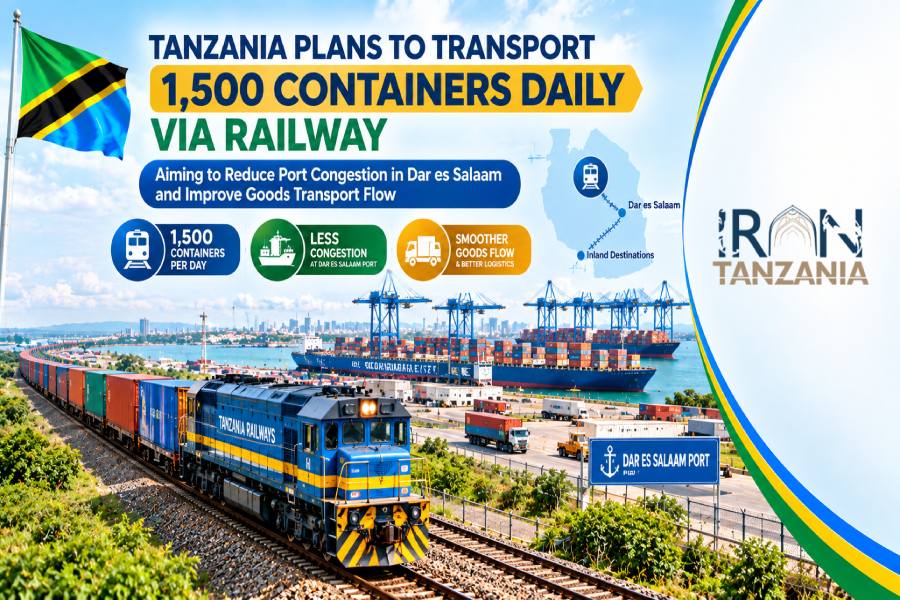
Tanzania plans to expand the use of its existing railway infrastructure to move up to 1,500 containers per day from Dar es Salaam Port. The initiative aims to reduce pressure on roads, lower logistics costs and improve the movement of cargo to inland depots and other destinations.
According to a report published by The Citizen on 15 October 2026, the government intends to make greater use of railway lines operated by Tanzania Railways Corporation (TRC) and the Tanzania-Zambia Railway Authority (TAZARA).
1. A target of 1,500 containers daily
The plan focuses on using existing and upgraded railway infrastructure more effectively, rather than relying entirely on the construction of new railway lines.
The announced target is divided between two networks:
-
TAZARA railway: Potential capacity of around 500 containers per day.
-
TRC and the standard-gauge railway network: A target of up to 1,000 containers per day.
Together, these capacities could support the government’s target of 1,500 containers daily. However, this figure represents a planned operational target, not confirmation that the full volume is already being transported by rail.
2. TAZARA’s role in reducing congestion
According to The Citizen, the TAZARA line currently transports up to approximately 100 containers per day. Logistics operators, including Bravo Logistics and African Inland Container Depot, have also begun trial operations using hired locomotives and wagons.
The trial operations have a reported capacity of around 300 containers daily. The potential capacity of the TAZARA network could increase to approximately 500 containers a day as additional inland depots join the arrangement.
The railway connects Dar es Salaam Port with inland container facilities and logistics areas around the city. Greater use of this route could shift some cargo away from trucks and reduce pressure on busy roads.
3. Extending standard-gauge rail access to the port
Another part of the initiative involves extending TRC’s standard-gauge railway (SGR) connection to Dar es Salaam Port.
According to the report, a 3.8-kilometre extension to Gate 14 of the port is intended to support rail freight movements to inland destinations, including Kwala, Morogoro, Bahi and Isaka.
The targeted capacity for this part of the network is up to 1,000 containers daily. TRC is also preparing rail shunting equipment and rehabilitating some existing wagons to support freight operations.
The port connection could make it easier to transfer containers directly from port facilities to the railway network and inland depots, reducing dependence on road transport.
4. Why Tanzania wants to expand rail freight
Dar es Salaam Port is an important trade gateway for Tanzania and landlocked countries in East and Central Africa. As cargo volumes grow, moving containers efficiently from the port to their final destinations has become increasingly important for importers, exporters and logistics providers.
A greater share of rail freight could help to:
-
Reduce truck traffic on busy port access roads.
-
Shorten cargo delivery delays.
-
Ease pressure on urban roads and transport corridors.
-
Improve links between the port, inland depots and distribution centres.
-
Make transport schedules more predictable for businesses.
The effectiveness of the plan will depend on competitive rail tariffs, reliable train schedules, efficient cargo handling and coordination between the port and inland terminals.
5. Potential implications for regional trade and Iranian companies
Improved rail connections from Dar es Salaam Port could matter to companies trading with Tanzania and other East and Central African markets. The port serves domestic destinations as well as regional trade routes, so more efficient cargo movement could affect delivery times and overall transport costs.
For Iranian companies interested in African markets, the developments may justify exploring opportunities in areas such as:
-
Railway equipment, spare parts and freight-handling technology.
-
Warehouse machinery, packaging systems and container-handling equipment.
-
Partnerships with Tanzanian logistics operators, importers and distributors.
-
Evaluating freight costs and delivery routes through Dar es Salaam Port.
However, the announcement does not itself confirm a procurement tender or a guaranteed opportunity for foreign suppliers. Interested companies should verify procurement requirements, technical specifications, import regulations and the possibility of working with local partners.
6. Has the 1,500-container target been achieved?
The report published on 15 October 2026 describes 1,500 containers per day as the government’s target. It also reports that the TAZARA line currently moves up to around 100 containers daily, while trial operations by some logistics companies have a capacity of approximately 300 containers a day.
It is therefore important to distinguish between current throughput, potential network capacity and the government’s overall target. The report does not specify a date by which the full 1,500-container target will be achieved.
Commercial results will also depend on rail pricing, train reliability and the performance of inland depots.
Conclusion
Tanzania’s plan to move up to 1,500 containers daily by rail is part of a broader effort to improve the efficiency of Dar es Salaam Port and strengthen the country’s logistics network. Greater use of TAZARA and TRC infrastructure could ease road congestion and improve connections between the port and inland freight facilities.
For importers and exporters, the key issue will be the plan’s actual performance. Rail tariffs, transit times and cargo-handling efficiency will ultimately determine whether the initiative delivers measurable commercial benefits.
Iran Tanzania — Supporting trade between Iran and Africa
Businesses seeking to explore the Tanzanian market, identify buyers and commercial partners, evaluate export routes or develop B2B relationships across Africa can explore the services of the Iran–Africa Business Center.
Frequently Asked Questions
1. How many containers does Tanzania aim to move by rail each day?
The government has set a target of up to 1,500 containers daily from Dar es Salaam Port using existing railway networks.
2. Which railway operators are involved?
The initiative involves Tanzania Railways Corporation (TRC) and the Tanzania-Zambia Railway Authority (TAZARA).
3. Why is Tanzania expanding rail freight?
The main objectives are to reduce port and road congestion, lower logistics costs and improve cargo movement to inland destinations.
4. Is the 1,500-container target already being achieved?
The figure is a government target, not a confirmed current daily total. The report published on 15 October 2026 describes lower existing volumes on parts of the network and plans to increase capacity.
5. How could this affect Iranian exporters?
More efficient freight connections could influence shipping costs and delivery times for goods entering Tanzania and potentially moving onward to regional markets. Exporters should confirm actual freight rates and transit times with logistics providers.
Primary Source: The Citizen, Tanzania, 15 October 2026.
Read the original report: Tanzania targets moving 1,500 containers daily on railway
