

Tanzania’s Fisheries Export Earnings Reach $181.6 Million, Rising 11.3%

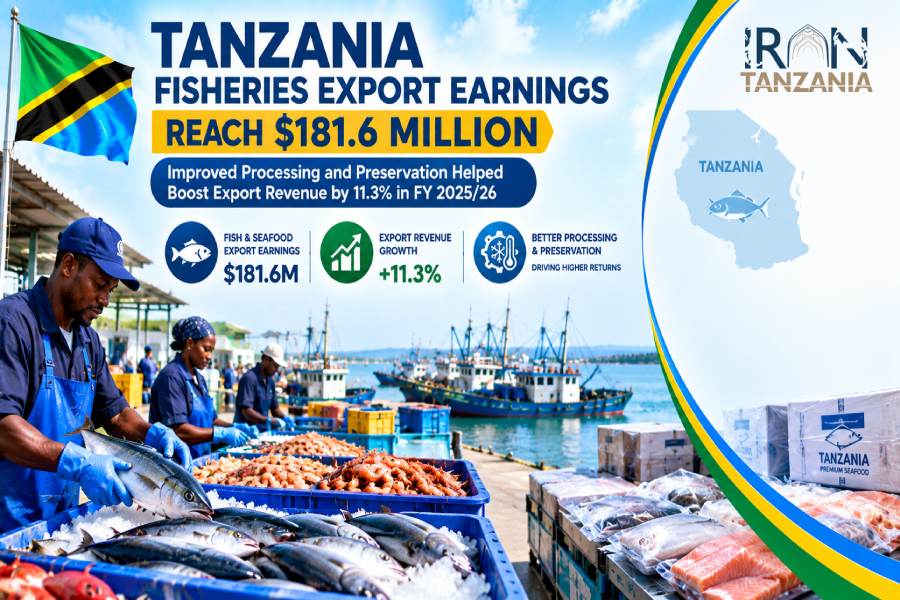
Tanzania’s earnings from fish and fisheries product exports reached $181.6 million in the year ending August 2026, an increase of 11.3% compared with the previous year. A report published by The Citizen on 17 October 2026 attributed the growth partly to improvements in processing and preservation.
The increase highlights the importance of developing the fisheries value chain beyond catching fish. Better processing, preservation and product preparation can help maintain quality, reduce post-harvest losses and improve the value of products supplied to international markets.
1. Export growth goes beyond fishing volumes
Fisheries play an important role in Tanzania’s food supply and in economic activity around coastal areas and inland lakes. However, the sector’s export performance depends on more than the quantity of fish caught. Processing, packaging, storage, transport and access to international buyers also affect export earnings.
According to The Citizen, Tanzania’s fish and fisheries export earnings increased from $163.1 million in the preceding year to $181.6 million in the year ending August 2026. This represents an increase of $18.5 million.
Without detailed information about export volumes, product composition and selling prices, it is not possible to determine precisely how much each factor contributed to the increase.
2. Processing and preservation add value
Fish and seafood are highly perishable and require suitable infrastructure and careful handling. Delays in transportation or inadequate refrigeration can reduce product quality, increase waste and weaken export competitiveness.
Improvements in the following areas can help strengthen the sector:
-
Cold-chain infrastructure: Cold storage, ice production and refrigerated transport to maintain product quality.
-
Industrial processing: Cleaning, filleting, freezing and preparing fish for specific markets.
-
Standardised packaging: Protecting products during storage and transportation.
-
Quality and food-safety controls: Meeting the requirements of importing markets.
-
Post-harvest loss reduction: Preserving more of the catch and reducing losses caused by spoilage.
The benefits depend on product type, target market, production costs and compliance with relevant standards.
3. Commercial opportunities across Tanzania’s fisheries value chain
Higher export earnings may encourage businesses to examine opportunities in equipment supply, food processing, cold storage and related services. Potential areas for assessment include:
-
Refrigeration systems and industrial ice-making equipment.
-
Fish-processing and packaging machinery.
-
Freezing equipment and refrigerated vehicles.
-
Food-grade packaging materials.
-
Laboratory and quality-control equipment.
-
Technical maintenance and repair services.
For Iranian companies, these sectors may offer avenues for market research and potential business partnerships. However, growth in fisheries exports does not automatically guarantee demand for particular imported products. Businesses should validate customer requirements, competitor pricing, technical specifications and import conditions before investing.
4. Expanding access to export markets
Maintaining export growth requires both product quality and access to suitable international markets. Food-safety standards, traceability, packaging, export certification and reliable delivery can all influence whether seafood products are accepted by foreign buyers.
Sustainable market development is more likely when producers can maintain consistent quality, reliable supply and competitive prices. Cooperation with logistics providers, distributors and international buyers can help strengthen these capabilities.
5. What the trend could mean for Iran–Tanzania trade
The growth in Tanzania’s fisheries exports creates a reason to examine trade opportunities in food products, processing equipment and related technologies.
Iranian companies could investigate demand for cold-storage systems, packaging machinery, freezing equipment and technical services. Before entering the market, businesses should:
-
Identify local processors, importers and distributors.
-
Verify applicable import requirements and technical standards.
-
Compare product prices with competing suppliers.
-
Calculate shipping, insurance, customs and after-sales costs.
-
Assess whether a local commercial or technical partner would be beneficial.
Important: The reported $181.6 million figure represents export earnings. It does not, by itself, establish the sector’s net profit, the physical volume exported or the size of the market for imported fisheries equipment.
6. Lake Victoria’s importance to fish exports
Tanzania’s freshwater fisheries account for a substantial share of the country’s fish exports. According to The Citizen, Lake Victoria contributes an estimated 80–85% of export volumes. Nile perch is a key product, with fillets supplied to markets in Europe, the Americas and Asia. Other export products include sardines and fish maws, known locally as Mabondo.
Marine products, including crabs and lobsters from the Indian Ocean, account for an estimated 15% of national fish export volumes. Better cold storage, ice supply and refrigerated transportation along the coast could help increase shipments of higher-value marine products.
7. Investment in cold-chain and preservation technology
Maintaining quality from the point of landing to the final buyer remains a significant challenge for fisheries. In some areas, unreliable electricity and limited access to refrigeration can constrain fish preservation.
According to The Citizen, the Fish4ACP initiative has supported technologies including solar-powered freezers and ice-making facilities in communities around Lake Tanganyika. Two ice plants have been established in Kigoma and Uvinza, with another planned for Tanganyika District in Katavi Region. Each plant has a reported production capacity of 15 tonnes of ice per day.
Such initiatives illustrate how investment in preservation infrastructure can help maintain quality, reduce losses and improve the ability of fisheries businesses to supply export markets.
Conclusion
Tanzania’s fish and fisheries export earnings reached $181.6 million in the year ending August 2026, increasing by 11.3%. The reported performance highlights the role of processing, preservation and value-chain development in strengthening the sector.
For Iranian companies, the trend provides a basis for investigating opportunities in food-processing machinery, refrigeration, ice production and packaging. Successful market entry will require careful assessment of local demand, technical requirements and Tanzanian import regulations.
Iran Tanzania — Connecting businesses with African markets
Companies seeking to identify buyers and commercial partners, research the Tanzanian market and establish B2B relationships across Africa can explore the services of the Iran–Africa Business Center.
Frequently Asked Questions
1. How much did Tanzania earn from fish exports?
Tanzania earned $181.6 million from fish and fisheries product exports in the year ending August 2026.
2. How much did fisheries export earnings increase?
Export earnings rose by 11.3%, from $163.1 million in the preceding year to $181.6 million.
3. What are Tanzania’s main fish export products?
Important products include Nile perch fillets, sardines and fish maws. Marine exports also include products such as crabs and lobsters.
4. What business opportunities could be relevant to Iranian suppliers?
Potential areas to investigate include refrigeration, ice-making, fish-processing machinery, packaging and quality-control equipment.
5. Why is cold-chain infrastructure important for fisheries exports?
It helps preserve product quality and safety, reduce post-harvest losses and maintain seafood quality during longer storage and transport periods.
