

Tanzania Seeks Greater Mineral Value Addition and Mining Industry Development

Tanzania is shifting its mining strategy towards greater domestic mineral processing, refining and industrial production as the government seeks to retain more economic value from the country’s mineral resources.
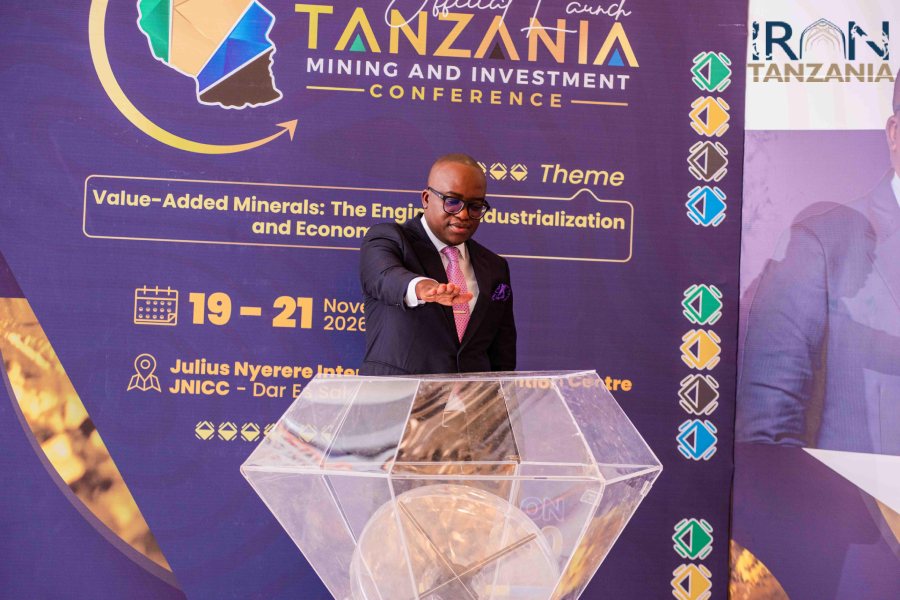
This strategy will be a central theme of the Tanzania Mining and Investment Conference 2026 (TMIC 2026), scheduled to take place from November 19 to 21 at the Julius Nyerere International Convention Centre in Dar es Salaam.
Held under the theme “Value-Added Minerals: The Engine of Industrialisation and Economic Growth,” the conference will bring together mining companies, international investors, financial institutions, mineral processors, technology providers and government representatives to explore investment opportunities across Tanzania’s mining value chain.
Mining Sector Exceeds Tanzania’s GDP Contribution Target
Tanzania’s mining sector has become an increasingly important contributor to the national economy. Its contribution to GDP reached 10.1 percent in 2024, exceeding the government’s target of 10 percent for 2026 ahead of schedule.
Mineral export earnings also increased to approximately $5.4 billion in 2025, compared with $4.12 billion in 2024.
Gold remains Tanzania’s leading mineral export. However, the government is seeking to expand the economic potential of other resources, including graphite, nickel and rare earth elements.
Moving Beyond Raw Mineral Exports
One of the main objectives of Tanzania’s current mining strategy is to develop downstream industries and increase domestic mineral processing.
A significant share of the economic value generated by minerals is created after extraction through refining, industrial processing and manufacturing. Developing these activities locally could create jobs, encourage technology transfer and increase opportunities for Tanzanian businesses.
TMIC 2026 will highlight investment opportunities in several areas, including:
- Gold processing, refining and value-added products
- Graphite processing for battery supply chains
- Nickel and cobalt-related industries
- Rare earth mineral extraction and processing
- Steel, copper, cement and other mineral-based products
- Mineral smelting and refining facilities
- Industrial parks and special economic zones
Critical Minerals and Global Supply Chain Opportunities
Graphite, nickel and rare earth elements are among the strategic minerals that could strengthen Tanzania’s position in global clean-energy and advanced technology supply chains.
Graphite is used in battery anodes, while nickel is an important material in several battery technologies. Rare earth elements such as neodymium and praseodymium are used in permanent magnets for electric vehicle motors and wind turbines.
Growing global demand for these minerals is creating opportunities for Tanzania to attract investment not only in exploration and extraction but also in domestic processing and manufacturing.
Infrastructure and Financing Are Key to Industrial Expansion
Expanding mineral processing requires more than mineral resources and investor interest. Processing and refining facilities depend on reliable electricity, water, transport infrastructure, specialised technology and skilled workers.
Investment in power generation, railways, roads, ports and industrial parks will therefore be important for Tanzania’s mineral value addition strategy.
Financing is another major consideration. Smelting, refining and mineral-based manufacturing facilities require substantial capital. Cooperation between government institutions, private investors, banks and development finance institutions could support the implementation of these projects.
Business Opportunities for Local and International Companies
Tanzania’s move towards domestic mineral processing could create opportunities for companies operating in several areas, including:
- Mining and mineral processing machinery
- Industrial equipment and plant construction
- Engineering and technical consultancy
- Laboratory and mining technology services
- Joint ventures in downstream mineral industries
- Transport, warehousing and logistics
- Technology transfer and workforce training
For Iranian companies, these developments may also create opportunities to explore cooperation with Tanzanian mining businesses, particularly in industrial equipment, machinery, engineering services and the supply of products required by mineral processing facilities.
TMIC 2026: A Platform for Mining Investors
The Tanzania Mining and Investment Conference will be held from November 19 to 21, 2026, in Dar es Salaam. The event is expected to provide a platform for investors to explore the country’s mineral potential, examine new projects and establish direct business connections with companies and institutions operating in the mining industry.
Conclusion
Following the growth of mining’s contribution to the economy and rising mineral export earnings, Tanzania is now seeking a new phase of industry development focused on processing, refining and domestic manufacturing.
The success of this strategy will depend on attracting investment, improving infrastructure, transferring technology and encouraging effective participation by local and international companies.
