

EU Extends Trade Preferences Framework to 2036, Maintaining Duty-Free Access for Tanzanian Exports

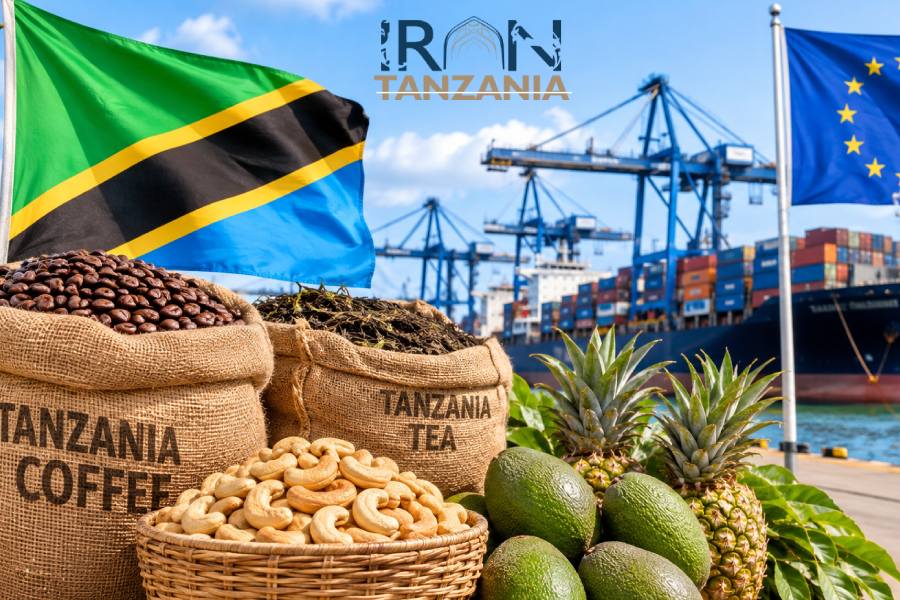
The European Union (EU) confirmed on October 26, 2026, a ten-year extension of its Generalised Scheme of Preferences (GSP), covering the period from January 1, 2027, to December 31, 2036. The decision maintains the EU’s preferential trade framework for developing countries and is significant for Tanzania’s continued access to the European market.
Tanzania, as a least-developed country (LDC), benefits from the EU’s Everything But Arms (EBA) arrangement. Under this scheme, eligible Tanzanian exports receive duty-free and quota-free access to the EU market for virtually all products, except arms and ammunition.
An important distinction is that the extension of the broader GSP framework to 2036 does not mean that Tanzania’s EBA access expires in that year. Under the revised EU framework, EBA preferences will continue indefinitely for eligible least-developed countries.
Why Is Duty-Free Access Important for Tanzania?
The European Union is a major trading partner for African economies. Preferential access can reduce import tariff costs and help eligible exporters compete in the European market.
According to figures reported in the EU–Africa trade briefing, trade in goods between the EU and Africa reached approximately EUR 357 billion in 2025, compared with EUR 236 billion in 2016.
African exports to the EU under the EBA scheme also increased from around EUR 112 million to nearly EUR 5 billion in 2025.
Which Tanzanian Export Sectors Could Benefit?
Continued preferential access is relevant to a range of Tanzanian export sectors, including:
- Agricultural products such as coffee, tea, cashew nuts and avocados
- Horticultural products and processed foods
- Cotton and selected textile products
- Minerals and raw materials
- Manufactured and value-added goods
However, preferential tariffs do not automatically guarantee market access. Exporters must also comply with EU rules of origin, sanitary and phytosanitary requirements, technical standards, packaging regulations and other applicable import conditions.
Opportunities for Investment and Value Addition
The continuation of preferential access could support Tanzania’s efforts to expand local processing and increase the value of its exports.
Rather than relying solely on raw commodity exports, Tanzania can explore opportunities in coffee processing, cashew processing, food manufacturing, textiles and mineral value addition.
The framework may also be relevant to foreign investors considering Tanzania as a production base for eligible exports to the European market, provided that applicable rules of origin and EBA requirements are met.
For Iranian companies, this development could create opportunities to explore cooperation with Tanzanian businesses in agricultural processing equipment, food manufacturing machinery, packaging, industrial inputs and technology transfer.
What Exporters Should Consider
Tanzanian exporters seeking to benefit from EBA preferences should verify the applicable customs classification, rules of origin, export documentation and EU product requirements before shipping goods.
Businesses should also monitor changes in EU trade regulations and compliance requirements. Preferential tariff treatment does not exempt products from European quality, safety and legal standards.
Conclusion
The EU’s decision to extend its Generalised Scheme of Preferences framework through 2036 provides a longer-term basis for preferential trade with developing economies. For Tanzania, the continuation of the EBA arrangement preserves duty-free and quota-free access to the EU market for eligible products.
This framework could support agricultural exports, local processing and industrial development while creating opportunities for trade and investment cooperation between Tanzanian businesses and international partners, including Iranian companies.
Sources:
- European Union, Regulation (EU) 2026/1395 on the Generalised Scheme of Preferences.
- EU Access2Markets, The EU’s renewed GSP scheme: Key updates for 2027.
- TanzaniaInvest, EU Extends GSP to 2036, Keeping Duty-Free Access for Tanzanian Exports, October 28, 2026.
