

Tanzania and UNIDO Launch Five-Year Industrial Development Programme to Strengthen Local Manufacturing

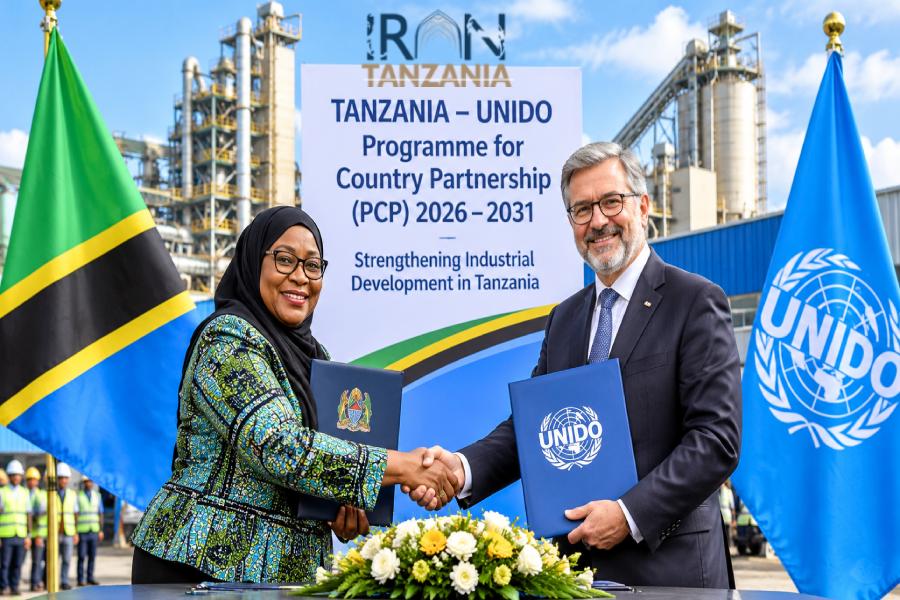
The Government of Tanzania and the United Nations Industrial Development Organization (UNIDO) have launched a five-year initiative aimed at accelerating inclusive and sustainable industrial development. The Programme for Country Partnership (PCP) 2026–2031 is designed to strengthen domestic manufacturing capacity, increase local value addition, develop industrial skills and improve the competitiveness of Tanzanian industries.
The programme was officially launched on November 3, 2026, during the National Industrial Development Conference in Dodoma. It is a government-led initiative supported by UNIDO’s technical expertise and partnership network, bringing together public institutions, private companies, financial institutions and development partners.
Indicative Investment Framework of Nearly $67 Million
According to UNIDO, the programme has an indicative investment framework of almost US$67 million. The initiative aims to mobilise resources from the Tanzanian government, development partners, climate funds and private investors.
The figure represents the programme’s indicative investment framework rather than funds already disbursed or fully committed. Actual financing will depend on resource mobilisation and the development of specific projects.
Six Strategic Priorities
The PCP 2026–2031 is structured around six main areas:
- Industrial policy and governance: Strengthening industrial institutions, policies and implementation frameworks.
- Sustainable value chains and value addition: Supporting local processing of agricultural, livestock, forestry, mining and marine products instead of relying mainly on raw material exports.
- Skills development: Improving technical and professional skills to meet the needs of a growing manufacturing sector.
- Investment and export promotion: Attracting investors, improving market access and strengthening the export capacity of Tanzanian businesses.
- Cleaner production and circular economy: Promoting resource efficiency, reducing industrial waste and encouraging environmentally sustainable production.
- Energy access and efficiency: Improving access to reliable energy and supporting more efficient energy use across industrial operations.
Moving from Raw Material Exports to Local Processing
A central objective of the partnership is to increase the value generated within Tanzania by expanding domestic processing and manufacturing. Developing local value chains could strengthen links between farmers, miners, suppliers and industrial producers while creating employment opportunities.
Potential areas of focus include agro-processing, food manufacturing, mineral processing, metal industries, textiles, construction materials and other resource-based industries.
The programme also supports Tanzania’s Development Vision 2050, which places industrialisation, higher productive capacity and stronger regional and international trade competitiveness among its long-term ambitions.
Business Opportunities for International Suppliers
As Tanzania seeks to expand its industrial base, demand for machinery, technology and specialised services could increase. Potential areas of opportunity for international companies include:
- Industrial machinery and production-line equipment
- Agricultural and food-processing technologies
- Mining, metalworking and chemical-industry equipment
- Industrial raw materials and intermediate products
- Energy-efficiency technologies and equipment
- Quality-control, packaging and automation systems
- Engineering services, technical training and technology transfer
For Iranian exporters, the programme may create opportunities to explore Tanzania’s demand for industrial machinery, processing equipment, chemicals, petrochemical products and engineering services. However, commercial opportunities will depend on specific projects, import requirements, technical standards and partnerships with local businesses.
Conclusion
The Tanzania–UNIDO Programme for Country Partnership 2026–2031 establishes a framework for coordinating industrial policy, investment mobilisation and domestic manufacturing development. Its focus on value addition, workforce skills, exports and cleaner production could create opportunities for Tanzanian manufacturers and international suppliers.
The programme’s actual impact will depend on financing, project implementation and private-sector participation. For Iranian companies, monitoring specific industrial projects and identifying the equipment and inputs required by Tanzanian manufacturers will be essential to assessing potential business opportunities.
Sources: United Nations Industrial Development Organization (UNIDO) and The Citizen, Tanzania.
