

Tanzania Seeks to Increase Coffee Export Value Through Domestic Processing and Packaging

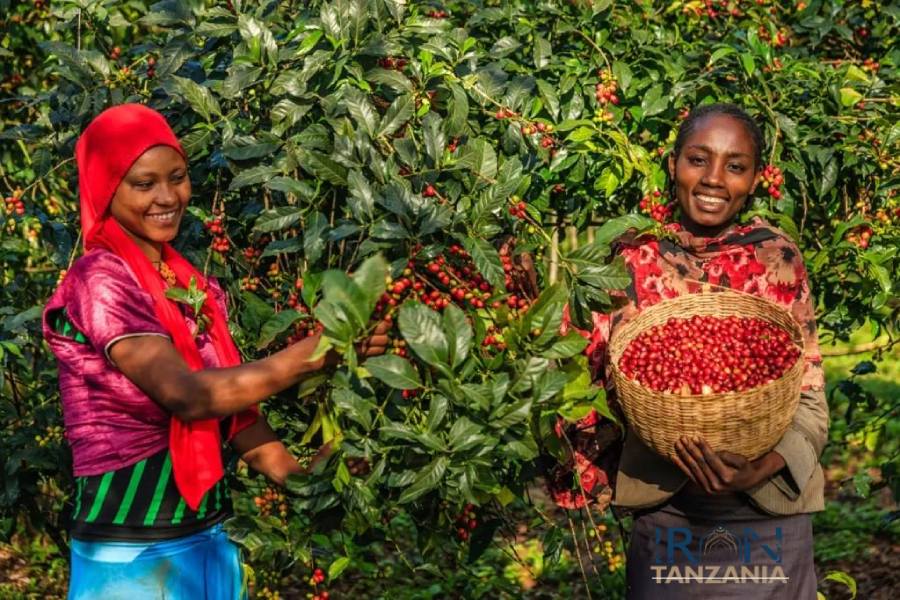
Tanzania is seeking to capture a greater share of the economic value generated by its coffee industry by expanding domestic roasting, processing, packaging and branding. Industry stakeholders argue that the country’s heavy reliance on exporting unroasted coffee beans limits opportunities to generate additional export revenue, create industrial jobs and develop internationally recognised Tanzanian coffee brands.
According to a report published by The Citizen on November 12, 2026, data from the World Bank’s World Integrated Trade Solution (WITS), based on UN Comtrade statistics, show that Tanzania exported approximately 82.15 million kilograms of unroasted, non-decaffeinated coffee in 2024. In comparison, exports of roasted coffee stood at only 456,524 kilograms.
Tanzania earned approximately $292.8 million from exports of unroasted coffee in this category, while roasted coffee exports generated around $2.5 million. The figures highlight a significant gap between raw coffee exports and finished products with higher added value.
The Value-Addition Gap in Tanzania’s Coffee Exports
Tanzania is an important coffee-producing country in East Africa, supplying international markets with both Arabica and Robusta coffee.
However, much of its coffee is exported as green beans, with roasting, grinding, packaging and consumer branding taking place in importing countries.
As a result, part of the revenue, employment and industrial value generated during the final stages of production is captured outside Tanzania.
Alejandro Galante, Director of APK, told The Citizen that expanding domestic roasting facilities and developing Tanzanian coffee brands could strengthen the country’s position in international markets.
Japan, Germany and the United States: Key Markets for Tanzanian Coffee
Tanzania already has established access to major coffee-consuming markets across Asia, Europe and North America.
According to 2024 trade data, Japan was the largest destination for Tanzanian unroasted coffee, importing approximately $47.7 million worth of the product. Germany followed with $37.8 million, while the United States imported around $30 million.
Italy and Switzerland were also major destinations, with imports valued at approximately $29.9 million and $26 million, respectively.
The European Union remains a particularly important market. According to the United States Department of Agriculture’s Foreign Agricultural Service (USDA-FAS), in its May 2026 report, the EU purchases approximately five times as much Tanzanian green coffee as the United States.
These markets could also offer opportunities for Tanzanian roasted and packaged coffee products. However, entering this segment requires compliance with quality, packaging and traceability standards, as well as a better understanding of consumer preferences.
Developing Domestic Consumption and the Local Coffee Market
Increasing domestic processing is not limited to export opportunities. Expanding local coffee consumption could also create stable demand for roasting, packaging and ready-to-consume coffee products.
Developing local brands, increasing the availability of packaged coffee in retail outlets, expanding coffee shops and raising consumer awareness of Tanzanian coffee are among the measures that could support the domestic market.
Industry stakeholders argue that stronger local consumption could increase competition among buyers and exporters for available coffee supplies, helping to develop more value-added activities within the country.
Financing the Coffee Value Chain
Expanding coffee processing and packaging requires investment in machinery, warehouses, quality-control systems and working capital.
In this context, the Tanzania Agricultural Development Bank (TADB) has reported total financing of approximately TSh668.04 billion for coffee value-chain projects. This includes direct project financing and funds channelled through partner financial institutions.
The financing supports activities across production, crop collection, storage, processing, marketing and cooperative development.
In October 2026, Stanbic Bank Tanzania also announced its commitment to financing businesses across the coffee value chain, from farmers and processors to exporters.
These financing initiatives could improve access to capital for local businesses seeking to expand processing capacity and develop finished coffee products.
Business Opportunities for Iranian Companies
Tanzania’s shift towards domestic coffee processing could create opportunities for Iranian companies operating in food manufacturing, industrial machinery and packaging.
Potential areas of cooperation include:
1. Coffee Roasting and Grinding Machinery: Supplying industrial and semi-industrial roasting machines, grinders and coffee preparation equipment.
2. Packaging Equipment: Providing packaging machinery, multilayer bags, valve-equipped coffee packaging and filling and weighing systems.
3. Quality-Control Technology: Supplying laboratory equipment, moisture analysers, bean quality-control devices and product evaluation systems.
4. Warehousing and Storage: Providing warehouse equipment, humidity-control systems and storage solutions to preserve coffee quality.
5. Finished Coffee Products: Partnering with Tanzanian companies and cooperatives to produce roasted, ground and packaged coffee under local or joint brands.
6. Marketing and Export Services: Supporting brand development, packaging design and the identification of buyers in regional and international markets.
Entering this market requires an assessment of production capacity, raw material availability, export-market standards, machinery import regulations and potential local partners.
Conclusion
With its established coffee production base, Tanzania is seeking to move beyond a predominantly raw-bean export model and expand domestic processing, packaging and branding.
The significant difference between the value of unroasted and roasted coffee exports highlights the potential for downstream industries to increase export earnings, create jobs and strengthen national brands.
For Iranian companies active in food-processing machinery, packaging, industrial equipment and export services, this development could create opportunities for industrial and commercial cooperation with Tanzania’s coffee sector.
