

Tanzania Targets 8,000MW Power Generation Capacity by 2030 as New Energy Projects Advance

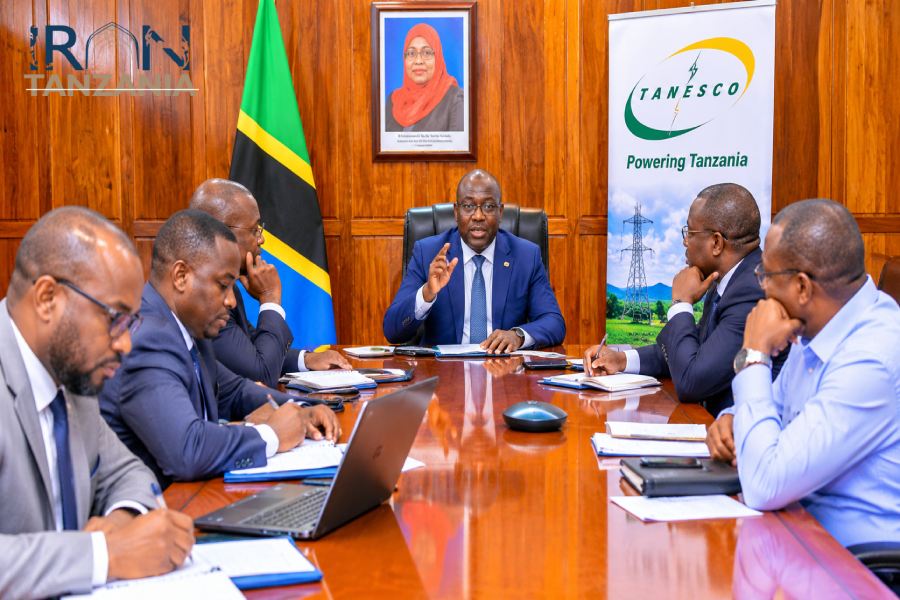
The Tanzania Electric Supply Company Limited (TANESCO) has presented a comprehensive plan to increase the country’s electricity generation capacity to 8,000 megawatts (MW) by 2030.
The plan includes ongoing projects and developments at different stages of preparation, which are collectively expected to add 3,856.5MW to the national electricity grid.
The proposal was presented to Energy Minister Dr Juma Homera during a meeting at the Ministry of Energy in Dar es Salaam. It forms part of Tanzania’s National Energy Compact 2025–2030 and the government’s broader strategy to support industrial and economic growth.
Hydropower and Solar Projects in the Development Pipeline
One of the projects highlighted by TANESCO is the Malagarasi River Hydropower Project, which is expected to generate 49.5MW. According to the report, construction has reached 33 percent completion.
The solar energy pipeline also includes two major projects:
- Kishapu Solar Power Project: 100MW.
- Zuzu Solar Power Project in Dodoma Region: 130MW.
Both projects remain at the preliminary preparation stage and are expected to contribute to Tanzania’s solar power development.
$2.5 Billion Mchuchuma Coal Power Project
Another major development presented in TANESCO’s plan is the Mchuchuma Coal Power Project in Njombe Region.
The project is expected to generate 2,000MW, with an estimated investment cost of $2.5 billion. According to Daily News, the proposed power plant has an estimated operating lifespan of more than 56 years.
Other planned developments will use solar, wind and natural gas resources across different parts of Tanzania.
These include:
- Makambako project: 100MW.
- Singida project: 200MW.
- Mkuranga natural gas project: 177MW.
- Dodoma solar project: 100MW.
According to the report, several projects are currently at different stages of power purchase agreement (PPA) negotiations and other preparations.
Government Calls for Faster Project Implementation
Following the presentation, Energy Minister Juma Homera directed TANESCO to accelerate ongoing projects and complete negotiations for projects that have not yet commenced by February 2027.
The directive is intended to prepare the projects for implementation and speed up the expansion of national electricity generation.
Expanding power capacity is particularly important for Tanzania as electricity demand continues to grow alongside industrial development, mining activities, transport infrastructure and new investment.
Business Opportunities for Iranian Companies
Tanzania’s expanding energy project pipeline could create opportunities for Iranian companies operating in power generation, industrial equipment and engineering services.
Potential areas of cooperation include:
- Solar power equipment: Supplying solar panels, inverters, mounting structures and electrical equipment.
- Hydropower systems: Providing turbines, generators, mechanical equipment and control systems.
- Transmission and distribution: Supplying transformers, cables, switchgear and substation equipment.
- Gas and thermal power plants: Providing components, auxiliary equipment and technical services.
- Energy storage: Supplying industrial batteries and electricity storage systems.
- Engineering and contracting: Participating in project design, installation, maintenance and implementation.
As several projects remain at preparation or negotiation stages, interested companies should assess individual project requirements, financing arrangements, tender conditions and technical specifications before pursuing commercial opportunities.
Conclusion
TANESCO’s plan to reach 8,000MW of electricity generation capacity by 2030 highlights the strategic importance of energy infrastructure in Tanzania’s industrial development.
The proposed pipeline covers hydropower, solar, wind, natural gas and coal-based generation. If financing and implementation proceed successfully, these projects could significantly expand the country’s electricity generation capacity.
For Iranian companies active in power generation, industrial electricity equipment and engineering services, Tanzania’s energy expansion offers potential opportunities to explore cooperation in the East African market.
