

Tanzania Targets US$209 Million in Sisal Export Earnings Through Production and Processing Expansion

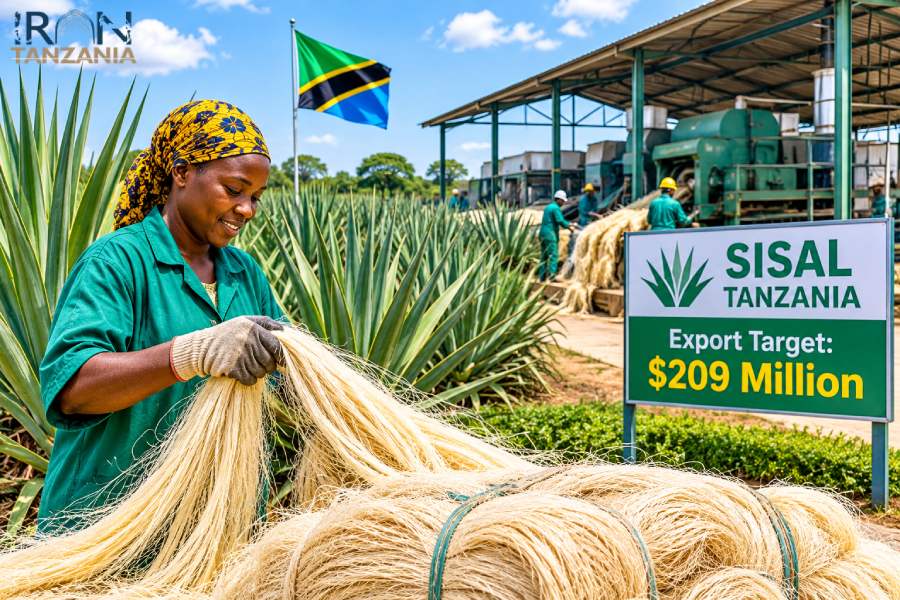
Tanzania is stepping up efforts to expand sisal production, strengthen domestic processing and attract investment as it targets annual export earnings of US$209 million from the natural fibre industry.
According to the Tanzania Sisal Board (TSB), the country also aims to increase long-term annual production to 150,000 tonnes.
The strategy focuses on expanding cultivation, attracting private investors, developing processing industries and producing higher-value goods for domestic and international markets.
Sisal is one of Tanzania’s important natural fibres, with applications in traditional rope-making as well as packaging, household products and various industrial sectors.
Tanzania’s Current Sisal Production and Exports
Tanzania currently produces approximately 62,000 tonnes of sisal annually, with around 80 percent exported to international markets.
Current export earnings are estimated at more than US$62.74 million.
The Tanzania Sisal Board’s figures also show that manufactured products such as ropes, twines and carpets account for approximately 2,295 tonnes, valued at US$5.09 million.
These figures highlight the potential to expand domestic processing and increase the contribution of finished sisal products to export earnings.
Expanding Sisal Cultivation Across Tanzania
The Tanzania Sisal Board is encouraging the expansion of cultivation into new agricultural areas.
Tabora Region, particularly Nzega District, is among the areas being targeted for increased sisal production. Farmers are being encouraged through support measures that include free planting materials.
The Board is also assessing suitable areas near the borders of Morogoro and Iringa regions for potential cultivation.
Another initiative involves intercropping sisal with horticultural crops such as sweet peppers, hot peppers and fruits. This approach could help farmers diversify their income while making more productive use of agricultural land.
Attracting Investment in Domestic Processing Industries
Expanding local processing capacity is a central part of Tanzania’s sisal development strategy.
The Board is working with private investors through public-private partnerships (PPPs) and other investment arrangements to establish additional processing industries.
More than 58 companies currently operate in the sisal sector, many of them run by young entrepreneurs.
The industry also involves approximately 50,000 smallholder farmers and more than 1,500 farmers affiliated with Agricultural Marketing Cooperative Societies (AMCOS).
Increasing smallholder participation is expected to strengthen raw material supplies for processing facilities and support the expansion of the domestic industry.
Moving from Raw Fibre to Higher-Value Products
Tanzania is seeking to move beyond exporting raw sisal fibre by encouraging the production of finished goods.
Products being promoted include:
- Agricultural packaging sacks
- Shopping and transport baskets
- Crates for fruits and vegetables
- Industrial ropes and twines
- Carpets and decorative products
- Household goods and handicrafts
The use of sisal factory waste is also emerging as an additional business opportunity.
Some local entrepreneurs are transforming discarded fibres into doormats, baskets, wall decorations and other household products. This approach can reduce industrial waste while creating opportunities for small businesses and employment.
Business Opportunities for Iranian Companies
Tanzania’s plans to expand the sisal industry could create opportunities for Iranian companies operating in agriculture, industrial machinery, packaging and natural-fibre manufacturing.
Potential areas of cooperation include:
- Fibre processing machinery: Supplying equipment for fibre extraction, cleaning, drying and preparation.
- Packaging industries: Developing sacks, baskets and environmentally friendly packaging products.
- Textile machinery: Supplying equipment for rope, twine, carpet and industrial textile production.
- Recycling technologies: Developing solutions to convert sisal waste into commercially valuable products.
- Industrial investment: Exploring partnerships with Tanzanian manufacturers and investors to establish processing facilities.
As Tanzania places greater emphasis on domestic value addition, opportunities may increasingly emerge in processing and finished-product manufacturing rather than raw fibre trading alone.
Conclusion
Tanzania’s US$209 million sisal export target reflects its efforts to strengthen natural-fibre production and expand the country’s value-added manufacturing capacity.
Increasing annual production from approximately 62,000 tonnes to 150,000 tonnes, expanding cultivation areas, attracting private investment and developing local processing industries are central to this strategy.
For Iranian companies active in agricultural machinery, textiles, packaging and recycling, developments in Tanzania’s sisal industry offer potential opportunities to explore exports and industrial cooperation in the East African market.
Sources:
- The Citizen Tanzania, “How Tanzania Plans to Achieve $209m Sisal Export Target,” November 13, 2026.
- Tanzania Sisal Board, sector statistics and development plans.
- InAfrika, “Tanzania Sisal Board Pushes Local Processing as It Targets $209m in Exports,” November 15, 2026.
