

Tanzania and Norway Expand Economic Cooperation in Energy, Agriculture and Manufacturing

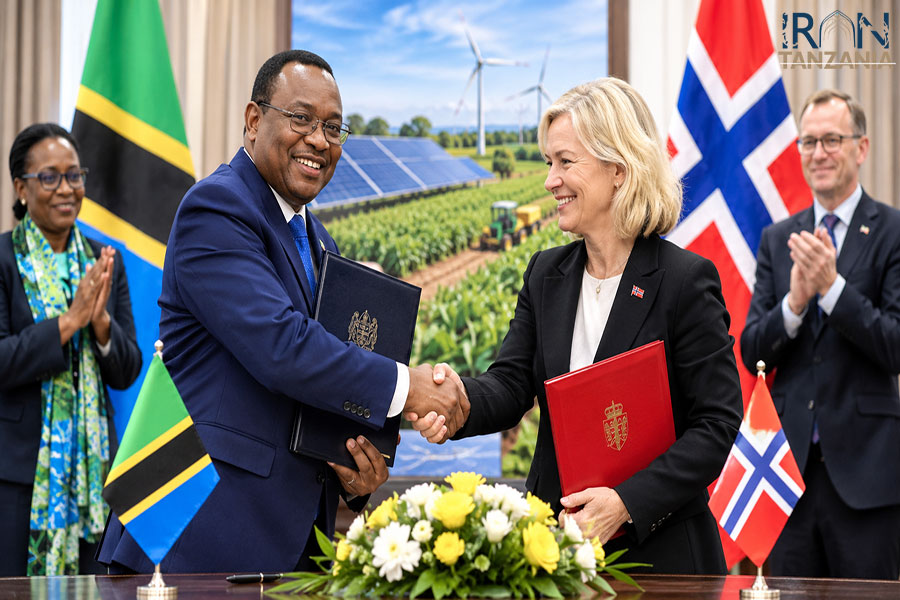
Tanzania and Norway have taken a new step toward strengthening their economic relations through a Joint Declaration signed in Oslo on November 18, 2026. The declaration aims to expand bilateral trade, attract investment, encourage private-sector participation and support technology transfer across key sectors of the Tanzanian economy.
The agreement was signed during the Fourth Round of Tanzania–Norway Political Consultations, co-chaired by Tanzania’s Minister for Foreign Affairs and East African Cooperation, Mahmoud Thabit Kombo, and Norway’s Foreign Affairs Minister, Espen Barth Eide.
Both countries highlighted trade, investment and private-sector development as important drivers of sustainable economic growth, innovation and employment creation.
Energy Cooperation and Natural Gas Development
Energy remains one of the most significant areas of cooperation between Tanzania and Norway. Tanzania’s natural gas resources, renewable energy potential and infrastructure development plans offer opportunities for international investment and technical partnerships.
Norwegian energy company Equinor has operated in Tanzania since 2007 and holds a 65% participating interest in offshore Block 2, alongside ExxonMobil, which holds 35%. Exploration activities have resulted in nine gas discoveries, with estimated resources exceeding 20 trillion cubic feet of gas in place.
Further cooperation could cover natural gas development, renewable energy, electricity transmission, energy storage and technology transfer.
Agriculture and Food Security
Agriculture is another important area for expanding bilateral cooperation. Norway has previously supported Tanzania’s agricultural development through initiatives involving the Alliance for a Green Revolution in Africa (AGRA).
In February 2025, a three-year project worth 15 million Norwegian kroner was launched to support agricultural transformation in Tanzania. The initiative focuses on agricultural investment, strengthening small and medium-sized enterprises and expanding opportunities for farmers, women and young people.
Potential areas for further cooperation include modern irrigation, agricultural machinery, storage facilities, food processing and improved access to international markets.
Manufacturing, Blue Economy and Technology Transfer
Manufacturing and industrial development are also important priorities in Tanzania’s economic transformation agenda.
Norwegian expertise and investment could support industrial equipment, production technologies, agricultural processing and workforce training.
The blue economy, fisheries and aquaculture offer additional opportunities. Norway’s experience in marine resource management, seafood processing and storage could help strengthen Tanzania’s production capacity and export competitiveness.
Digital technology, research cooperation and climate financing are also among the areas discussed by the two countries.
Potential Opportunities for Iranian Companies
The expansion of Tanzania–Norway economic relations reflects Tanzania’s continued efforts to attract international investment, technology and industrial partners.
Iranian companies may also explore opportunities in the Tanzanian market, particularly in:
- Energy and infrastructure: Electricity equipment, power-generation components, energy storage systems and engineering services.
- Agriculture and food processing: Processing machinery, packaging lines, cold storage and irrigation equipment.
- Manufacturing: Industrial machinery, production lines, spare parts and technical cooperation.
- Fisheries and the blue economy: Seafood processing, preservation and packaging equipment.
- Technical services: Equipment maintenance, workforce training and industrial project support.
Companies interested in these opportunities should assess local regulations, technical standards, potential Tanzanian partners and market competition before entering the market.
Conclusion
The Joint Declaration represents a new framework for strengthening economic relations between Tanzania and Norway and expanding cooperation beyond traditional development assistance toward investment-driven partnerships.
Energy, agriculture, manufacturing, the blue economy and technology are among the sectors with potential for further collaboration. As Tanzania advances its National Development Vision 2050, the implementation of this framework could create additional opportunities for international businesses and investors.
Sources: Daily News Tanzania, Norway’s Ministry of Foreign Affairs and The Guardian Tanzania.
