

Blog
Tanzania’s Avocado Exports Surpass $97 Million as the Country Beats Its 2030 Target

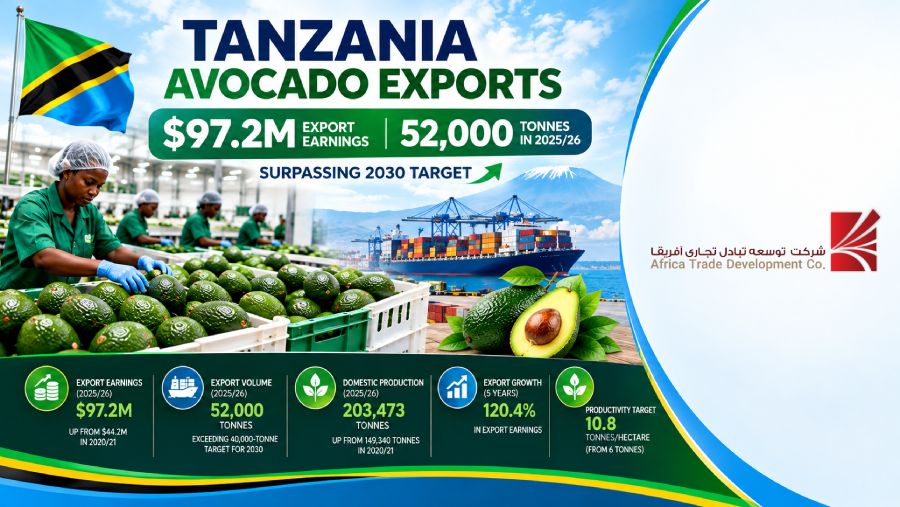
Tanzania’s avocado industry has recorded significant growth, with export earnings rising from $44.2 million in 2020/21 to $97.2 million in 2025/26—an increase of 120.4 percent over five years.
According to The Citizen, Tanzania exported 52,000 tonnes of avocados in 2025/26, surpassing its target of 40,000 tonnes set for 2030, four years ahead of schedule.
Production and Export Volumes Continue to Rise
Tanzania’s national avocado production increased from 149,340 tonnes in 2020/21 to 203,473 tonnes in 2025/26, representing growth of approximately 36.2 percent.
Over the same period, export volumes rose from 15,433 tonnes to 52,000 tonnes—a 237 percent increase.
These figures demonstrate that Tanzania’s avocado sector is expanding in both production capacity and international market reach.
What Is Driving Tanzania’s Avocado Export Boom?
Agriculture Minister Daniel Chongolo attributed the sector’s growth to improvements in the investment environment and increased private-sector participation.
Key areas include production, purchasing, processing, cold-chain logistics and international trade.
The government is also pursuing initiatives to improve farm productivity, expand agricultural extension services and provide farmers with better planting materials.
Tanzania Targets Higher Farm Productivity
The government aims to increase average avocado productivity from approximately six tonnes per hectare to 10.8 tonnes per hectare under its Agriculture Sector Transformation Plan 2050 and Agenda 10/30.
For the 2026/27 season, the Ministry of Agriculture plans to provide specialised agronomic training to 9,500 farmers and 500 agricultural extension officers. The government is also planning to expand the distribution of quality avocado seedlings.
Key Export Markets for Tanzanian Avocados
Tanzania is expanding its international market reach, with opportunities reported in China, South Africa, India, France, the Netherlands and the United Arab Emirates.
Maintaining fruit quality, meeting phytosanitary requirements, ensuring traceability and using suitable packaging and transport systems are important for maintaining competitiveness in these markets.
Cold-Chain Logistics and Collection Infrastructure
Reliable collection, storage and refrigerated transportation are essential for reducing post-harvest losses and preserving avocado quality.
According to The Citizen, the government allocated TZS 3 billion for 20 regional avocado collection centres. Plans also include standardised roadside collection hubs and support for a packhouse equipped with cold-chain facilities.
These investments could improve grading, packaging and handling while strengthening Tanzania’s ability to supply international buyers.
Value Addition: From Fresh Fruit to Processed Products
Tanzanian officials are encouraging greater domestic processing so the country can retain more value from its growing avocado industry.
Potential products include avocado oil, cosmetics and animal-feed products. Expanding processing could create demand for machinery, packaging equipment, extraction technology, cold storage and quality-control services.
Business Opportunities for Iranian Companies
Tanzania’s avocado export growth could create opportunities for Iranian companies supplying agricultural and food-processing technologies, including:
-
Fruit-processing and grading machinery
-
Packaging equipment
-
Cold-storage and refrigerated transport systems
-
Irrigation and water-management technologies
-
Agricultural machinery
-
Oil-extraction and filtration equipment
-
Packaging materials for fresh produce
-
Food-industry engineering services
Companies considering this market should assess import regulations, technical standards, local competition and the specific needs of Tanzanian growers, exporters and processors.
Conclusion
Tanzania’s avocado export earnings reached $97.2 million in 2025/26, while export volumes rose to 52,000 tonnes—exceeding the country’s 2030 target of 40,000 tonnes.
The next phase of growth is likely to depend on higher farm productivity, improved cold-chain logistics, better market access and greater domestic processing.
For international suppliers and investors, this expanding sector offers opportunities to explore partnerships across Tanzania’s agricultural, logistics and food-processing value chains.
Main source: The Citizen, “Tanzania’s avocado boom sends export earnings soaring past $97 million,” published October 8, 2026. R
