

Blog
Tanzania Highlights Climate Investment Opportunities

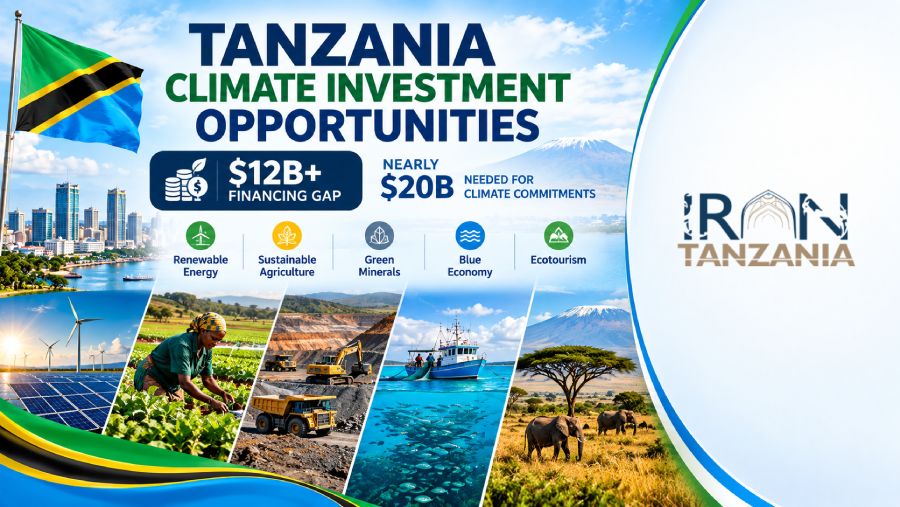
🇬🇧 Tanzania Highlights Climate Investment Opportunities in Renewable Energy, Sustainable Agriculture and Green Minerals
Tanzania is seeking to mobilise more private and international capital to address a climate financing gap of more than $12 billion.
At the Tanzania Climate Finance Roundtable in Dar es Salaam, government officials highlighted renewable energy, sustainable agriculture, green minerals, the blue economy and ecotourism as important investment opportunities.
The government is also seeking greater access to grants, concessional finance and private capital to support climate adaptation and low-carbon development.
Tanzania Faces a $12 Billion Climate Finance Gap
According to The Citizen, Tanzania needs nearly $20 billion to meet its climate commitments, while only about one-third of the required funding has been identified.
The government is therefore exploring a wider range of financing instruments, including:
- Green bonds
- Carbon finance
- Sustainable finance
- Concessional funding
- Private investment
- Investment guarantees
Five Key Climate Investment Areas
Renewable Energy
Tanzania is seeking investment in clean energy as it works to expand electricity generation.
The country has set a target of reaching 8,000 MW of electricity generation capacity by 2030, using a diversified energy mix that includes hydropower, solar, wind and geothermal energy.
Sustainable Agriculture
Climate change is increasing pressure on Tanzania’s agricultural sector through unpredictable rainfall, droughts and floods.
Investment opportunities include irrigation, renewable energy, water conservation, sustainable livestock production, fisheries and climate-friendly agricultural technologies.
Green Minerals
Tanzania is also seeking to move beyond exporting raw minerals toward greater domestic processing and value addition.
This creates potential opportunities in mineral-processing technology, mining equipment, energy-efficient technologies and industrial infrastructure.
Blue Economy
Tanzania’s Indian Ocean coastline and Zanzibar provide significant opportunities in the blue economy.
Potential areas include fisheries, aquaculture, marine tourism, maritime services and sustainable use of marine resources.
Experts have called for greater research, financing and private-sector participation to unlock the sector’s full potential.
Ecotourism
Ecotourism and sustainable tourism can combine environmental conservation with economic development and employment creation.
Potential opportunities include eco-lodges, wildlife tourism, sustainable coastal tourism and conservation-related projects.
Tanzania’s Sh7 Trillion Environmental Programme
The climate investment agenda is supported by Tanzania’s Sh7 trillion five-year environmental transformation programme, covering 2026–2030.
The programme focuses on ecosystem restoration, clean energy, waste management, carbon markets, tree planting and restoration of degraded land.
Opportunities for Iranian Companies
For Iranian companies, Tanzania’s growing climate-investment agenda could create opportunities in:
- Solar energy equipment
- Agricultural machinery
- Irrigation systems
- Food-processing equipment
- Water-treatment technologies
- Mining and mineral-processing equipment
- Environmental technologies
- Fisheries and aquaculture equipment
- Tourism infrastructure
- Engineering services
The opportunity is particularly relevant for companies capable of supplying technology, equipment and services across green investment value chains.
Conclusion
Tanzania is increasingly positioning climate action as an economic and investment opportunity, rather than simply an environmental challenge.
With renewable energy, sustainable agriculture, green minerals, the blue economy and ecotourism identified as priority areas, international investors may find growing opportunities in Tanzania’s emerging green economy.
The country’s estimated $20 billion climate financing requirement and more than $12 billion funding gap also indicate the potentially important role of private capital and international investment.
