



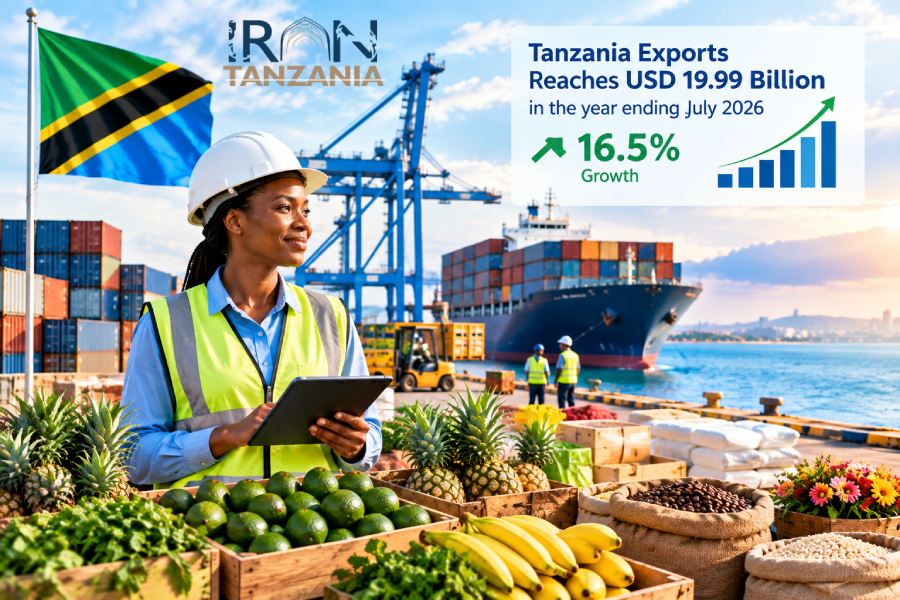
Tanzania’s exports of goods and services increased by 16.5% to USD 19.99 billion in the year ending July 2026, reflecting stronger foreign-exchange earnings and increased activity across key export sectors including gold, manufactured goods and services.
According to the Bank of Tanzania’s Monthly Economic Review for August 2026, total exports reached USD 19,985.8 million during the period.
Goods exports also recorded significant growth, increasing by 20.7% to USD 11.95 billion.
Tanzania’s Export Growth in the Year Ending July 2026
The latest figures highlight stronger performance across several areas of Tanzania’s external trade.
| Indicator | Year Ending July 2026 |
|---|---|
| Total exports of goods & services | USD 19.99 billion |
| Export growth | 16.5% |
| Goods exports | USD 11.95 billion |
| Goods export growth | 20.7% |
| Gold exports | USD 5.67 billion |
| Gold export growth | 37.4% |
| Manufactured exports | USD 2.22 billion |
| Manufactured export growth | 46% |
The figures indicate that Tanzania’s export expansion was supported not only by minerals but also by manufacturing and services.
Gold Remains a Major Driver of Tanzania’s Exports
Gold remains one of Tanzania’s most important export commodities.
Gold export earnings increased by 37.4% to approximately USD 5.67 billion in the year ending July 2026.
Gold accounted for around 47.4% of Tanzania’s merchandise export earnings, with higher international prices contributing to the increase.
The figures underline the continuing importance of Tanzania’s mining sector to foreign-exchange earnings and international trade.
Manufactured Exports Rise 46%
One of the most notable developments in Tanzania’s latest export data is the rapid growth of manufactured goods exports.
Manufactured exports increased by 46% to approximately USD 2.22 billion in the year ending July 2026.
Iron and steel products, glassware and textiles were among the products supporting this growth.
The expansion is particularly relevant from an investment perspective because it highlights the growing importance of manufacturing, processing and value addition within Tanzania’s export economy.
It may also create additional demand for industrial machinery, processing equipment, packaging solutions, logistics services and production technology.
Traditional Exports Continue to Support Tanzania’s Trade
Agricultural and traditional exports remain an important component of Tanzania’s external trade.
Traditional exports increased by 14.9% to approximately USD 1.63 billion during the year ending July 2026.
Major contributors included:
- Tobacco: approximately USD 588.6 million
- Cashew nuts: approximately USD 479.3 million
- Coffee: approximately USD 396 million
These figures highlight the continued role of agriculture while also pointing to potential opportunities in food processing, packaging, cold-chain logistics and agricultural value addition.
Transport and Tourism Strengthen Tanzania’s Services Exports
Tanzania’s export growth was not limited to physical goods.
Services receipts reached approximately USD 8.03 billion in the year ending July 2026.
Travel receipts reached around USD 4.29 billion, while transport receipts increased by 29.7% to approximately USD 3.22 billion. The rise in transport earnings was associated with higher freight revenues and increased transit cargo volumes.
Given Tanzania’s geographical position and the importance of its ports and regional transport corridors, logistics and transport remain strategically relevant to the country’s international trade.
What Does Tanzania’s Export Growth Mean for the Economy?
Reaching almost USD 20 billion in exports of goods and services highlights the growing importance of international trade to Tanzania’s economy.
The simultaneous expansion of manufactured exports, gold exports and service receipts indicates that several sectors are contributing to Tanzania’s external earnings.
However, the latest data also show continuing external-sector pressures. Imports of goods and services increased by 18.3% to USD 20.81 billion, while the current-account deficit widened to approximately USD 2.4 billion in the year ending July 2026.
This makes higher-value exports, domestic production and stronger supply chains important areas for future trade and investment discussions.
Business Opportunities Emerging from Tanzania’s Export Growth
The expansion of Tanzania’s export economy may create opportunities for companies involved in:
Industrial Machinery and Equipment
Growing manufacturing activity can increase demand for production lines, industrial equipment and processing machinery.
Agriculture and Food Processing
Tanzania’s agricultural base creates opportunities in processing, packaging, storage, cold-chain systems and agricultural technology.
Mining and Mineral Processing
Given the major contribution of gold to export earnings, mining equipment, processing technologies and related technical services remain relevant areas for business cooperation.
Logistics and Transportation
Higher transit cargo volumes and transport receipts highlight opportunities related to logistics, warehousing, freight and port-related services.
Technology and Technical Know-How
Expanding value-added production can increase demand for technology transfer, technical training and modern production systems.
Opportunities for Iranian Companies in Tanzania
For Iranian companies seeking to expand into African markets, Tanzania’s growing trade activity provides areas worth exploring in B2B trade, industrial supply and technology cooperation.
Potential areas include:
- Industrial machinery and equipment
- Agricultural and food-processing equipment
- Processing technologies
- Petrochemical products
- Industrial raw materials
- Packaging equipment
- Engineering and technical services
- Technology and know-how transfer
However, entering the Tanzanian market requires careful assessment of product demand, local buyers, import regulations, standards, pricing, distribution channels and business conditions.
