



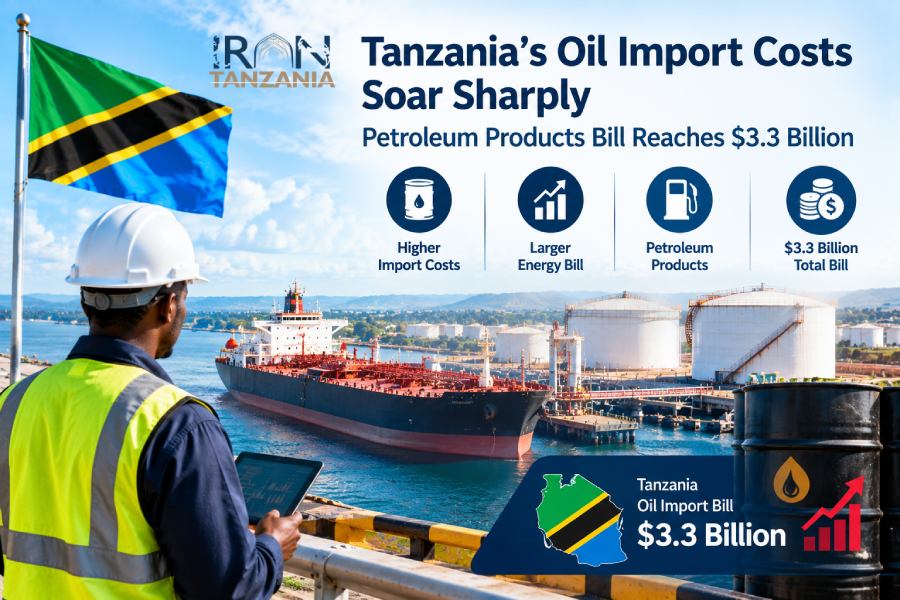
Tanzania’s petroleum import bill increased sharply in the year ending July 2026, reaching approximately US$3.3 billion as the country faced higher global oil prices and sustained domestic demand for fuel.
According to the latest data from the Bank of Tanzania (BoT), imports of refined white petroleum products rose by 42.3% to US$3.2968 billion, compared with approximately US$2.32 billion in the previous year.
The increase makes petroleum products one of the largest components of Tanzania’s import bill.
Petroleum Products Account for 18.9% of Goods Imports
Refined petroleum products accounted for approximately 18.9% of Tanzania’s total goods import bill during the year ending July 2026.
Total goods imports reached around US$17.44 billion, with the increase driven by capital goods, industrial supplies and refined petroleum products.
The figures underline the importance of fuel in Tanzania’s external trade and foreign-exchange requirements.
Why Are Tanzania’s Oil Import Costs Rising?
The latest data indicate that the increase in refined petroleum imports was associated with higher global oil prices and sustained domestic demand.
Global energy prices can have a significant impact on fuel-importing economies because higher international prices increase the amount of foreign currency required to purchase the same or similar volumes of petroleum products.
At the same time, fuel demand remains closely connected to economic activity.
Strong Domestic Demand for Fuel
Petroleum products are essential to several major sectors of Tanzania’s economy, including:
- Transport
- Manufacturing
- Construction
- Mining
- Agriculture
- Tourism
- Aviation
- Logistics
Tanzania’s petroleum-sector reports identify petrol, diesel, kerosene and Jet A-1 among the major imported petroleum products.
As economic activity and transportation requirements increase, demand for fuel can also rise.
Tanzania Relies on Imported Refined Petroleum Products
Tanzania continues to rely significantly on imported refined petroleum products to meet domestic and regional demand.
According to the Energy and Water Utilities Regulatory Authority (EWURA), Tanzania’s Bulk Procurement System manages the importation of key petroleum products, including petrol, diesel, Jet A-1 and kerosene.
This structure means that developments in international oil markets can have a direct impact on Tanzania’s fuel-import costs.
Ports Play a Major Role in Petroleum Imports
Tanzania’s petroleum-import infrastructure relies heavily on its coastal logistics network.
Major ports including Dar es Salaam, Tanga and Mtwara are used for receiving petroleum products.
According to Tanzania’s Petroleum Bulk Procurement Agency, petroleum products imported through the country’s bulk procurement system serve both domestic consumption and neighbouring markets.
This gives Tanzania an important role in regional fuel logistics in East Africa.
Impact on Tanzania’s External Accounts
The increase in petroleum imports comes as Tanzania’s overall import bill has also expanded.
In the year ending July 2026, Tanzania’s goods and services imports increased by 18.3% to about US$20.8 billion.
The country recorded a current-account deficit of approximately US$2.4 billion during the same period.
Higher petroleum-import costs therefore contribute to the country’s overall foreign-exchange requirements.
Energy Infrastructure Investment Opportunities
Tanzania’s growing energy requirements may create opportunities for investment in infrastructure and energy-related services.
Potential areas include:
- Fuel storage facilities
- Petroleum terminals
- Port infrastructure
- Fuel transportation
- Storage tanks
- Energy logistics
- Refining and processing
- Natural gas
- Renewable energy
- Energy-efficiency technologies
Developing such infrastructure can help improve the efficiency and resilience of Tanzania’s energy supply chain.
Opportunities for Iranian Companies
The growing Tanzanian energy market may also be relevant to Iranian companies operating in:
- Oil and gas equipment
- Storage tanks
- Pumps and compressors
- Petroleum transportation equipment
- Terminal equipment
- Refinery equipment
- Engineering services
- Maintenance services
- Energy infrastructure
- Energy-efficiency technologies
Iranian companies considering this market should assess Tanzanian import regulations, technical standards, licensing requirements, local partnerships, financing mechanisms and after-sales-service requirements.
Tanzania as a Regional Petroleum Logistics Hub
Tanzania’s petroleum market extends beyond domestic consumption.
According to the Petroleum Bulk Procurement Agency, during the 2024/25 financial year, approximately 52% of petroleum volumes imported through the bulk procurement system were destined for neighbouring countries, while 48% were for domestic use.
This highlights Tanzania’s role as a regional logistics and fuel-supply route for East African markets.
Its ports, road connections and links with landlocked neighbouring countries make petroleum logistics an important component of the wider regional trade system.
Tanzania’s Energy Market Outlook
The latest data show that refined petroleum products remain a major component of Tanzania’s import demand.
The US$3.30 billion petroleum-import bill recorded in the year ending July 2026 represents a 42.3% increase from the previous year.
The combination of global oil-price movements and domestic fuel demand means that Tanzania’s energy costs will remain closely connected to international energy markets.
At the same time, investments in natural gas, renewable energy, storage infrastructure, logistics and energy efficiency could contribute to greater diversification of the country’s energy system.
Conclusion
Tanzania’s refined petroleum import bill reached approximately US$3.3 billion in the year ending July 2026, representing a 42.3% increase from the previous year.
Petroleum products accounted for 18.9% of the country’s total goods import bill, making fuel one of Tanzania’s most significant import categories.
The increase was associated with higher global oil prices and sustained domestic demand.
For investors and international suppliers, the trend highlights potential opportunities across fuel storage, petroleum logistics, energy infrastructure, oil and gas equipment, natural gas, renewable energy and energy-efficiency technologies.
