

Blog
Tanzania Renewable Energy Investment: Solar, Wind & Hydro

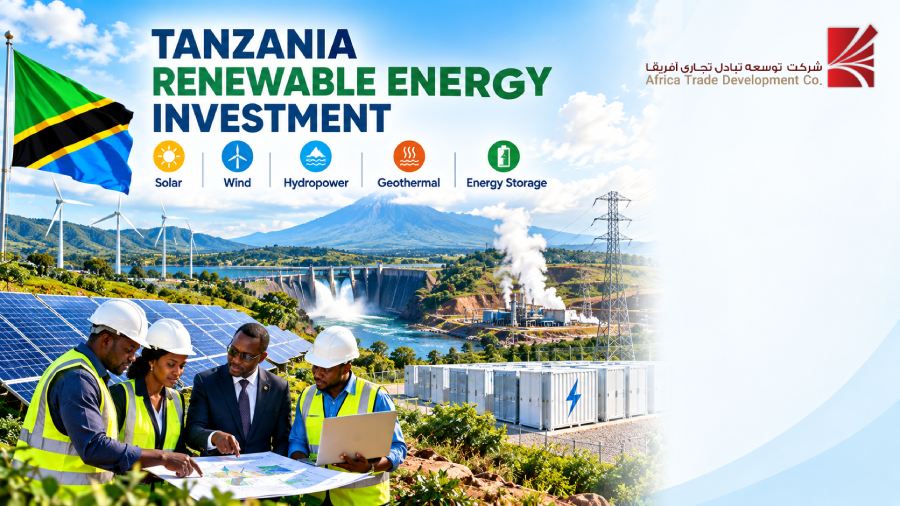
Tanzania Seeks Investment in Solar, Wind, Hydropower, Geothermal and Energy Storage
Tanzania is expanding its electricity generation capacity and diversifying its energy mix, creating opportunities for investment in solar, wind, hydropower, geothermal energy and energy storage.
In September 2026, Tanzania’s Ministry of Energy said the country was targeting 8,000 MW of electricity generation capacity by 2030 and was seeking investors with financial, technological and technical capacity to participate in energy projects.
Solar Energy: A Growing Investment Market
Solar power is one of the key areas of Tanzania’s renewable-energy strategy.
The country’s National Renewable Energy Strategy 2024–2034 includes targets for expanding solar generation, including both utility-scale projects and small power projects.
The Kishapu Solar PV Project in Shinyanga is one example, with a planned capacity of 150 MW and a 50 MW first phase.
Investment opportunities may include:
- Solar PV equipment
- Inverters and control systems
- Utility-scale solar farms
- Off-grid systems
- Mini-grids
- Solar-powered water pumping
- Installation and maintenance services
- Solar-plus-storage solutions
Wind Energy Potential
Wind power is another area Tanzania is seeking to develop.
Regions including Singida, Dodoma and parts of southern Tanzania have been identified as potential areas for wind development. Tanzania’s renewable-energy planning includes wind capacity expansion as part of the country’s broader diversification strategy.
Given the currently limited contribution of wind power to installed generation capacity, the sector offers room for new projects and technology partnerships.
Hydropower Remains Important
Hydropower continues to play a major role in Tanzania’s electricity system.
The 2,115 MW Julius Nyerere Hydropower Project is one of the country’s largest power projects, while other hydropower developments include Kakono and Malagarasi.
Tanzania is also supporting smaller hydropower projects.
The Rural Energy Agency has been providing technical assistance, training and support to small hydropower developers in southern regions.
This creates potential demand for:
- Hydropower turbines
- Generators
- Electrical equipment
- Control systems
- Engineering services
- Transmission equipment
- Operation and maintenance services
Geothermal Energy: An Emerging Opportunity
Geothermal energy is another resource being explored as part of Tanzania’s renewable-energy diversification.
The National Renewable Energy Strategy includes geothermal development targets, while projects in areas such as Mbeya and Songwe are at different stages of exploration and preparation.
Geothermal power can provide relatively stable generation compared with intermittent sources such as solar and wind, although projects require significant exploration, drilling, engineering and upfront investment.
Energy Storage Becomes Increasingly Important
As Tanzania expands solar and wind generation, energy storage can become an important supporting technology.
Battery Energy Storage Systems (BESS), energy-management systems and solar-plus-storage projects can help address variability in renewable generation and improve grid flexibility.
Potential investment areas include:
- Grid-scale battery systems
- BESS technology
- Energy-management systems
- Solar-plus-battery systems
- Mini-grid storage
- Off-grid energy systems
- Grid-control technologies
Regulatory Framework for Power Projects
Tanzania’s energy regulator, EWURA, has developed model Power Purchase Agreements for several generation technologies, including solar, wind, hydropower and geothermal projects. Updated model PPAs for these technologies were published in April 2026.
For investors, such frameworks can help structure project evaluation and negotiations. Individual projects, however, still require detailed assessment of licensing, grid connection, tariffs, land, PPAs, technical feasibility and financial viability.
Large Capital Requirements
Expanding renewable generation requires substantial financial resources.
Research on private-sector participation in Tanzania’s renewable-energy sector highlights the need for collaboration between the government, private sector and development partners to mobilize investment.
Tanzania’s 2026/27 energy plans have also targeted the mobilization of approximately $4.39 billion in private capital for the energy sector.
Opportunities for Iranian Companies
Tanzania’s renewable-energy expansion may create potential opportunities for Iranian companies with experience in:
- Solar equipment
- Power-generation equipment
- Hydropower technology
- Electrical and control systems
- Engineering and EPC services
- Battery storage
- Mini-grids
- Energy management
- Operation and maintenance
Companies entering the Tanzanian market should conduct detailed due diligence on licensing, local regulations, project structures, financing, grid requirements and procurement procedures.
Outlook
Tanzania’s renewable-energy strategy provides a framework for expanding solar, wind, hydropower and geothermal capacity through 2034.
As electricity demand increases, investment opportunities are likely to extend beyond power generation to transmission, distribution, energy storage, mini-grids, engineering, equipment supply and energy-management technologies.
Conclusion
Tanzania is positioning renewable energy as an important component of its long-term electricity expansion strategy.
For international investors, the opportunity is not limited to building power plants. The broader value chain—from equipment and engineering to energy storage, grid infrastructure and operation and maintenance—can also create potential business opportunities.
